

02
Nov
Will My Autoimmune Disease Prevent Me from Getting a Dental Implant for Tooth Replacement?
Losing a tooth does not have to be a huge deal. Sure, it may feel like it at first. This is especially true if the missing tooth is in your visible “smile zone,” where everyone can see the gap when you smile. Aside from the cosmetic concerns, a missing tooth can lead to some serious oral health complications down the road as well.
If you live in Pierrefonds, Dr. Ramin Mirmooji and the team at Msmiline Cosmetic Dentistry would like to share the benefits of dental implants with you. Patients have been reaping the benefits of dental implants from the local dentist for years, but what if you have an autoimmune disease? Will this prevent you from getting a dental implant? Let’s find out!
Dental implants are a proven and effective long-term solution that patients have been choosing to replace missing teeth for years. However, they may not be the ideal solution for everybody. If you are afflicted with specific medical conditions, such as an autoimmune disease, you may not find success with a dental implant. Dr. Mirmooji likes to sit down with each patient he sees to discuss medical histories to determine if they are a good candidate for dental implants.
What Is An Autoimmune Disease?
Autoimmune diseases are a type of illness that causes your body’s immune system to attack healthy tissue. This often leads to symptoms like inflammation. There are many different types of autoimmune disease, with some of the most common being:
- Lupus
- Rheumatoid arthritis
- Type 1 diabetes (affects the immune system)
- Multiple sclerosis
- Celiac disease
Call Our Office for More Information
New Patients : (514) 613-1888 | Exisiting Patients : (514) 675-3332
Request An Appointment
Will An Autoimmune Disease Prevent You From Receiving A Dental Implant?
When you schedule an appointment with your dentist for a consultation regarding dental implants, they will consider several factors to determine if you are a suitable candidate for the procedure. These factors include the current state of your oral health, overall well-being, and jawbone, which needs to be healthy and strong enough to support a dental implant. Your medical history will also be looked at to see if you have any diseases that could negatively impact the procedure’s success.
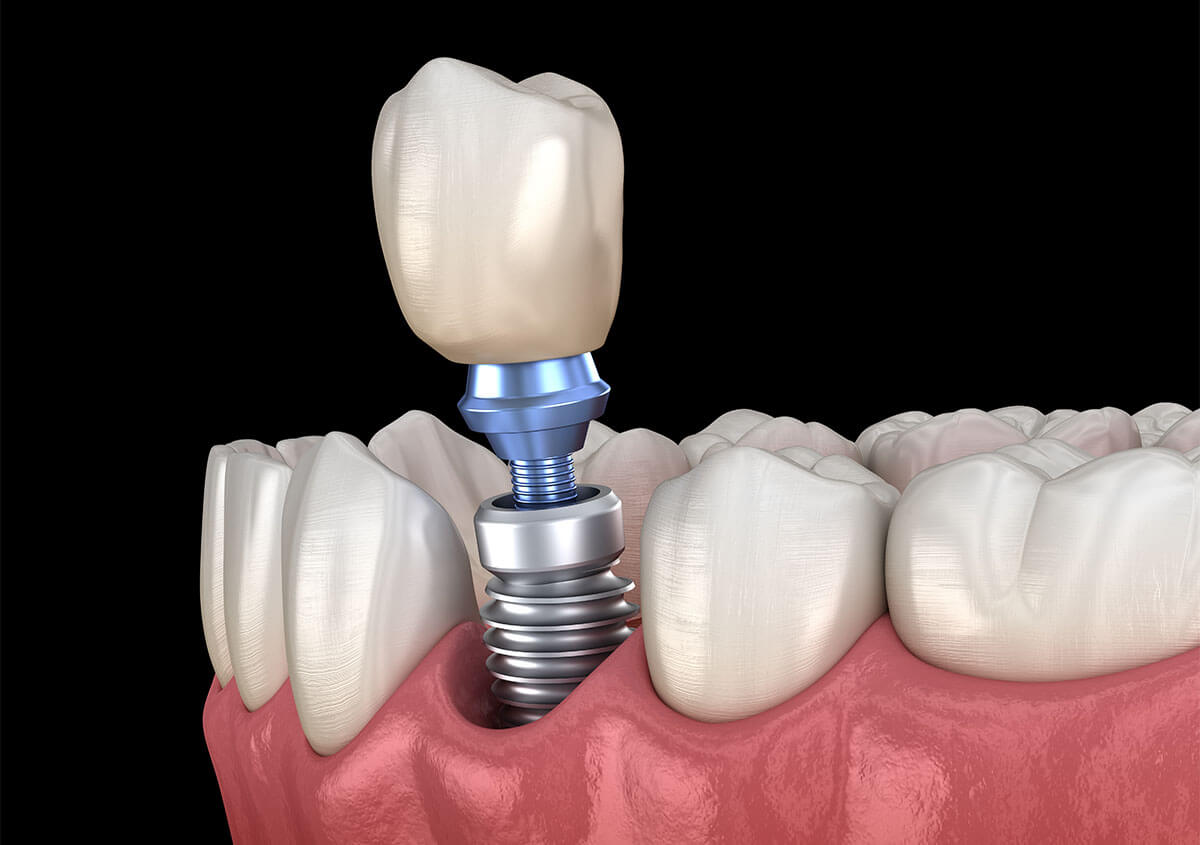
For a dental implant to succeed, the jawbone must be able to fuse to it once the implant has been surgically placed. This occurs during osseointegration, which takes several weeks while you heal from your implant procedure. If osseointegration fails for any reason, your implant will not be able to support the restoration being placed, usually a dental crown.
To answer the question, will having an autoimmune disease disqualify you from getting a dental implant? Studies do indicate that there is a link between autoimmune disease and dental implant failure. One of the common side effects of autoimmune disease is inflammation, which can make it more difficult for your gums to heal and for your jawbone to fuse to the implant. While an autoimmune disease can decrease the probability of you being considered a good candidate for the procedure, it does not automatically disqualify you. Talk with your dentist about your specific condition to determine your candidacy.
Schedule An Appointment Today
To schedule an appointment with Dr. Ramin Mirmooji and the team at Msmiline Cosmetic Dentistry, please call (514) 613-1888 today.
Share this Article
Dr. Ramin Mirmooji is a dynamic general practitioner who believes in providing excellent dentistry through personalized treatment plans and the best advice for patients. He graduated in Civil Engineering from South Bank Polytechnic (England) and studied microbiology and immunology at McGill University. He obtained his doctorate in dentistry from the University of Laval. He has followed many mini-residency courses in orthodontics, implantology, periodontics, endodontics, cosmetic dentistry, pain management, MTA disorders, etc. He is a member of the Quebec Dental Association, Canadian Dental Association (CDA), Dental Society of Montreal, and International Congress of Implantology.
Dr. Samer Abboud, who graduated in Paris, France, is a general dentist practicing orthodontic services in several dental offices in Montreal. He has also served as a clinical research coordinator at McGill University and a professor. He has trained in adult and pediatric orthodontics, occlusion, and dental surgeries and has earned many diplomas. He has been a member of the Ordre des Dentistes du Québec, CDA, Association des Chirurgiens Dentistes du Québec, Proprietary Dentists of Quebec, and the National Dental Examining Board of Canada.
Dr. Alexa Lynch is a University of Montreal graduate. She enjoys practicing different facets of dentistry and has a special interest in restorative and cosmetic dentistry, for which she has taken many continuing education courses. She aims to offer quality dental care to patients of all ages.